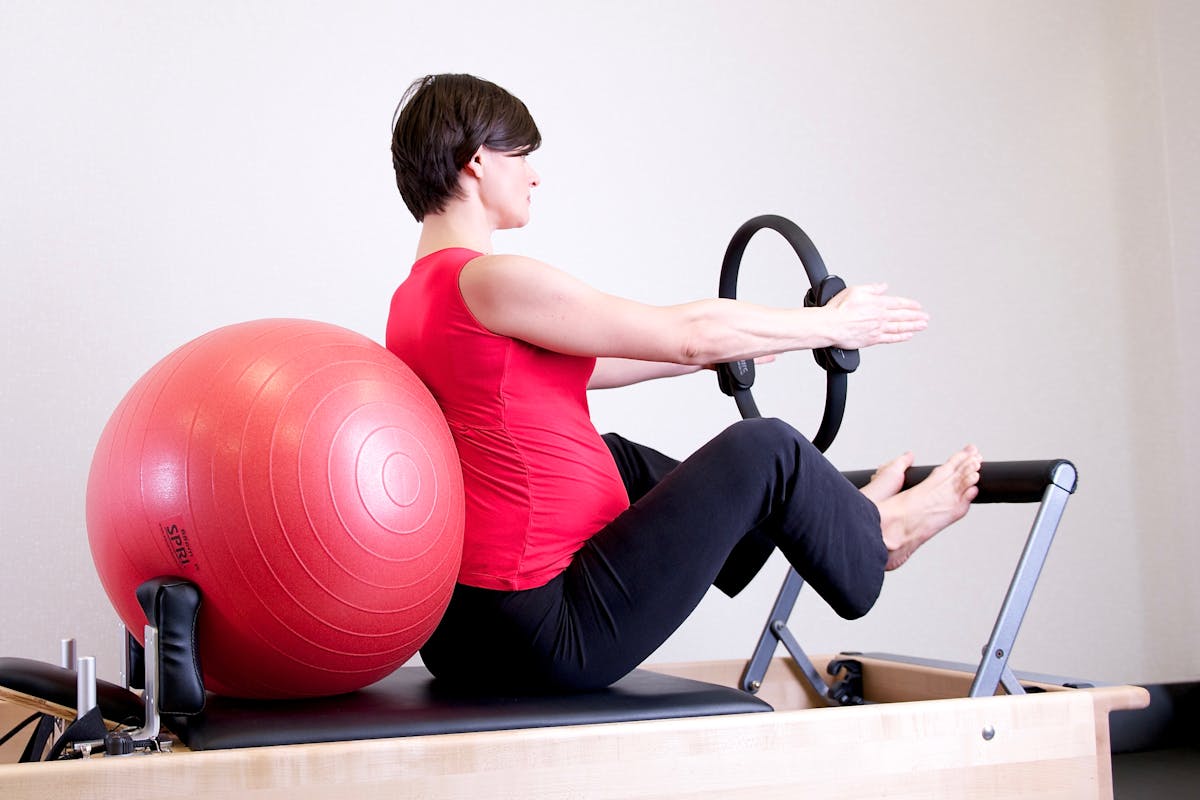
Practicing Pilates for pregnant women brings several benefits throughout pregnancy, providing greater comfort, reducing lower back pain and also helping with pelvic rotation. Check out other advantages in this article we have prepared for you!
When a woman becomes pregnant, her body goes through numerous hormonal, emotional and, most importantly, physical changes. Because of this, Pilates has become so important for pregnant women.
Regular practice of this exercise assists the practitioner at every trimester, easing pain, rectifying posture and bringing about increased comfort at every stage.
In addition, it should be noted that this activity is crucial for individuals seeking a natural childbirth, since the last trimester exercises relax the pelvic floor so that the opening can take place for the main event.
The exercises can be initiated as early as pregnancy onset, this way, the pregnant woman can maintain her body active throughout pregnancy, toning and strengthening muscles, easing physical changes-induced pain and discomfort.
10 benefits of pilates for pregnant women
Practicing this activity generates many benefits, but like any other exercise, it requires the supervision of a professional, especially during pregnancy.
Check out 10 benefits of Pilates in the lives of pregnant women.
- Helps maintain good posture by strengthening muscles.
- Reduces lower back and leg pain caused by increased belly weight.
- It improves the quality of sleep, which consequently ensures a higher level of energy during the day.
- Strengthens the pelvic floor, helping during natural childbirth.
- It increases physical resistance, ensuring greater agility for pregnant women, who can carry out daily tasks alone for longer.
- It ensures respiratory control through appropriate exercises so that the pregnant woman can better control her breathing, also helping during the pain of contractions.
- Improves blood circulation, preventing uncomfortable swelling that generally occurs in the second and third trimester of pregnancy.
- It stimulates the increase of hormones that ensure a good mood throughout pregnancy and light exercise and stretching reduce anxiety and stress.
- It guarantees greater safety for the pregnant woman, as she begins to get to know her body and its limits better during pregnancy.
- Last but not least, consistent practice throughout pregnancy guarantees a quicker and more tranquil recovery after giving birth.
Which Pilates exercises are the most recommended?
Practices must be prepared and selected according to the gestational stage and physical condition.
For those who lead a more sedentary routine, exercises should be lighter, unlike, for example, women who have been exercising for some time.
Some professionals advise pregnant women in this first group not to start the practice in the first trimester because this is the most sensitive period of pregnancy.
However, from the second onwards, lighter activities can be considered and end up providing the same benefits.
1. In the first trimester
For mothers who are allowed to practice Pilates at this stage, the exercises begin lightly, focused on muscle support, leg strength, breathing control and balance.
2. In the second trimester
At this stage, activities that strengthen the abdomen begin to be practiced, thus helping to protect the spine and prevent abdominal diastasis.
Other exercises for the lower limbs, with the aim of reducing swelling and fluid retention, are also started during this period.
3. In the third trimester
Here, some exercises with the pilates ball start to become more intense, this is because it is in this last phase that preparations for childbirth begin to be carried out, such as strengthening the pelvic floor, which helps in opening the pelvis, necessary for natural childbirth.
Even though it is routine to begin pelvic exercises only in the first month of the third trimester, some experts will opt to initiate them during the first few months or, for more inactive mothers, during the second trimester.
The reason for starting as early as possible is the intensity at which the exercises are performed, as some pregnant women need time to get used to their new body due to their weight.
Therefore, it is believed that the sooner the pelvic strengthening process is started, the more likely it will be to open well in the last few months.
Care when practicing Pilates
Just like water aerobics , Pilates for pregnant women does not have a list of prohibited exercises, only those that are less recommended.
Equipment that requires a lot of balance may become less safe as the months go by, because, as the pregnancy progresses, reflexes become slower and balance gradually changes.
Another point that is not recommended is lifting excessive weights or prolonged stretching , as some exercises should last a maximum of five minutes to avoid overloading the muscles and joints.
It is also important to highlight the danger that some positions can pose to the pelvic floor, causing excessive intra-abdominal pressure.
But don’t panic! Do remember to find a professional in the area to initiate the activities who, in conjunction with your doctor, will design a healthy workout plan ideal for every pregnancy stage taking into account your physical, emotional and hormonal status.
If the pregnancy is high-risk, no type of activity is recommended, not even Pilates. In this situation, only breathing exercises are recommended, which can be performed by many professionals, such as yoga instructors and physiotherapists. And, of course, the obstetrician will indicate what is ideal in each case.


Your ability to blend thought-provoking ideas with evocative language is truly remarkable. Every sentence seems to unlock a new door to understanding, leading the reader to a richer, fuller interpretation of the world around them. It’s rare to come across writing that does more than just tell a story — your words create entire worlds, and I found myself lost in them, not wanting to leave.